
Welcoming the 2026-28 Fellows of the Friends Incubator for Public Ministry

The Friends Incubator for Public Ministry is grateful to announce our first cohort of Fellows! This cohort represents a shared commitment to reclaiming public ministry as a communal practice rooted in worship, sustained by relationship, and accountable to the body. It includes the participation of five-yearly meetings on the East Coast of the United States.

First things first...
What is this Project?
The Friends Incubator Fellowship for Public Ministry supports Friends who are called into visible Spirit-led ministry and the meetings willing to walk with them. In the Quaker tradition, public ministry is never a solo act. It arises from worship, is tested in community, and is carried on behalf of the meeting into the world.
Each Fellow participates as part of a team that includes the minister, one or more elders, and their meeting. Over two years, these teams engage in shared discernment spiritual formation retreats and practical support, strengthening both the ministry itself and the meeting’s capacity to recognize, accompany and care for it. The fellowship helps meetings rebuild the practices of listening, leadership, accountability and encouragement that allow public ministry to flourish with integrity, thus becoming leaders in their own context, capable of facilitating the same work in other meetings in the future.
What is Public Ministry?
In the Quaker traditions, we are all ministers. We minister in each other's lives. This is a sacred obligation that requires support and accountability. Some are called for some period of their lives into a public-facing ministry that takes us out of our worshipping communities, while laboring under a specific concern. This is a sacred obligation that requires support and accountability.
Public ministry takes many forms, including speaking, writing, traveling, organizing, teaching, healing and bearing witness in times of crisis or change. The fellowship does not prescribe what a ministry should look like. Instead, it creates space for faithful experimentation grounded in worship and sustained by relationship, grounded in the meeting community.
At the midpoint of the fellowship, ministers, elders and meetings pause together for prayerful discernment asking what is emerging and how the Spirit is leading them forward. This shared reflection keeps the work responsive and rooted reminding us that public ministry is not only about individual callings but about the communal life that makes those callings possible.
Each individual public ministry Fellow enters the Incubator alongside a meeting that has agreed to walk faithfully with them over the course of the Fellowship. These meetings are not peripheral supporters. They are Fellows themselves, engaging intentionally in discernment, eldership, encouragement, and care. Together, ministers and meetings are participating in a living experiment, strengthening the spiritual infrastructure that allows public ministry to be named, tested, and sustained among Friends.
From the beginning, this work has been shaped by a simple but demanding conviction: public ministry is never the work of an individual alone. It emerges in relationship, is tested in community, and is sustained by shared faithfulness over time.
What Emerged Through Discernment
The Friends Incubator for Public Ministry had over ten times as many applicants as we had space for in this cohort. This cohort is supported by a grant from the Shoemaker Fund as well as individual donations. What we found was that interest in developing capacity for ministry in our meetings is enormous. The conscious need is great. Our meetings have a leading to revitalize our traditional approaches to ministry with creative new experiments.
The interview process itself became a form of ministry as we labored in discernment with every Friend who came forward. Over many hours of careful listening, patterns emerged that spoke not only to the callings of individual Friends, but to the condition and possibility of public ministry in the Religious Society of Friends today.
Again and again, Friends described ministry not as a role to be claimed, but as a responsibility that unfolds slowly through relationship. Few spoke of dramatic moments of certainty. Instead, callings were shaped through long faithfulness, responding to need, remaining present in difficulty, and learning when to speak and when to wait. Ministry appeared less as initiative and more as response.
Silence emerged not as retreat, but as discipline. Friends spoke of learning to trust quiet work, invisible labor, and the slow formation that comes from staying with complexity rather than rushing toward clarity.
There was a shared resistance to performative spirituality and a deep suspicion of charisma untethered from accountability.
Many callings were shaped in places of strain rather than stability. Ministry arose near suffering, institutional pressure, grief, injustice, and transition. Yet these ministries were not animated by urgency alone. They were marked by patience, humility, and a refusal to simplify what is difficult.
Across interviews, meetings mattered deeply. Friends spoke honestly of both nourishment and injury within Quaker community. Meetings were described as places of profound love and care, but also as places where gifts can go unnamed or misunderstood. What emerged most clearly was not disappointment, but longing. A longing for meetings to reclaim their role as communities that notice gifts, accompany callings, and stay engaged even when ministry is inconvenient or challenging. This was prophetic gift to us who administer this project. Thank you. We have a prayerfully held our desire to rise to the prophetic gift together and find the resources to expand our work together. It's a labor. Of love. But without further ado, here we share with beaming gratitude, the names of our five fellows for 2026-28...
The Fellows
Kelly Crouch and Friends Meeting of Washington
Friends Meeting of Washington brings a long history of faithful witness, spiritual depth, and engagement with public life. The Meeting’s participation in the Incubator reflects a shared discernment that ministry unfolding in centers of civic and political power requires careful communal holding, deep spiritual grounding, and sustained eldering.

Kelly Crouch and Friends Meeting of Washington are Fellows in the Incubator. Kelly is accompanied in this work by elder, Joe Izzo.

Kelly Crouch (they/them) is a Friend raised in rural southwest Ohio who now resides in Washington DC. Kelly came to the nation’s capital to work on Capitol Hill, where proximity to political power revealed the isolation and moral weight often carried by those serving in public roles. Interviews reflected a deep attentiveness to the interior lives of public servants whose work is visible, scrutinized, and demanding.
Kelly’s public ministry focuses on spiritual care for congressional staffers and others working within high-pressure public systems. This ministry emphasizes listening, grounding, and steady presence rather than advocacy alone. It is shaped by awareness of burnout and moral injury, and by a commitment to offering care that is nonjudgmental, sustained, and largely unseen.
Kelly is a sojourning member of Friends Meeting of Washington and a recorded minister from Wilmington Yearly Meeting. They hold graduate degrees from Union Theological Seminary and the London School of Economics. Their ministry weaves together theological formation, political experience, and a clear sense that much of the most faithful work happens quietly and over time.

Joe Izzo (he/they) serves as Kelly’s elder. Joe brings decades of pastoral, clinical, and spiritual experience to this role. Interviews reflected Joe’s capacity to remain present with pain without rushing toward resolution, to honor process and timing, and to offer accompaniment that is steady rather than directive.
Cheryl Demers-Holton and DeLand Friends Meeting
DeLand Friends Meeting embodies many of the themes that surfaced across interviews. After years of stops and starts, Friends re-gathered in 2018 and grew steadily into a vibrant monthly meeting recognized by Southeastern Yearly Meeting in 2024. The Meeting is widely known for its peace and social concerns work and for its consistent presence in the life of the wider community.

Cheryl Demers-Holton and DeLand Friends Meeting are Fellows in the Incubator. Cheryl is accompanied by elder, Linda Gurney.
Cheryl Demers-Holton (she/her) found the Religious Society of Friends in midlife after years of devoted Roman Catholic practice. Interviews spoke of encountering silence not as absence, but as invitation. That early experience continues to shape a ministry rooted in presence, listening, and trust.

A retired hospice nurse and former clinical director, Cheryl carried Quaker practices of attention and spaciousness into her professional life, where holding space for patients, caregivers, and staff became sacred work. Hospice care sharpened an attentiveness to timing, humility, and the limits of fixing what cannot be fixed.
Now retired from formal employment, Cheryl’s ministry is deeply embedded in the life of DeLand Friends Meeting. She serves as clerk of Worship and Ministry, accompanies seekers, and helps lead weekly discussions ranging from Quaker basics to urgent social concerns. Across these roles, a consistent emphasis emerges on helping others recognize and trust their gifts, especially those whose faithfulness is quiet or easily overlooked.

Linda Gurney (she/her) accompanies Cheryl as an elder. Linda’s life reflects decades of moral courage and sustained justice work shaped by the Sermon on the Mount, nursing, civil rights organizing, and community ministry. Her eldering is marked by steadiness, clarity, and an integrated faith that refuses to separate spirituality from action.
Marcus Mitchell and Providence Monthly Meeting
Providence Monthly Meeting accompanies this ministry with attentiveness and care, grounding outward work in worship and shared discernment. The Meeting’s participation reflects a willingness to hold visible public ministry within a strong communal container.

Marcus Mitchell and Providence Monthly Meeting are Fellows in the Incubator.

Marcus Mitchell (he/him) is a seasoned Friend whose three decades of Quaker practice shape both personal life and public ministry. Interviews returned again and again to Marcus’s understanding of leadership as relational rather than persuasive, and of listening as a spiritual discipline rather than a tactic.
Marcus’s ministry spans nonprofit leadership, civic engagement, and community building. A recent traveling ministry across thirty four states emerged not as performance, but as a Spirit led practice of curiosity and presence. Interviews reflected a deep trust in questions over answers and a commitment to encountering that of God across difference.
Lilia Fick and Green Street Friends Meeting
Green Street Friends Meeting, located in Philadelphia’s Germantown neighborhood, is a worship centered community known for openness to continuing revelation and deep commitment to justice. The Meeting’s life includes reparations work, public witness against racism and anti-Muslim bigotry, and sustained connection to its surrounding neighborhood. Its participation in the Incubator reflects a shared willingness to experiment while remaining grounded in worship.

Lilia Fick and Green Street Friends Meeting are Fellows in the Incubator.
Lilia Fick (she/they) is a lifelong Friend whose ministry integrates healing, spiritual accompaniment, justice seeking, ecological attentiveness, intervisitation, and artistic witness. Interviews reflected comfort with complexity and a refusal to simplify grief, history, or responsibility. Justice in this ministry is understood as repair rather than accusation.
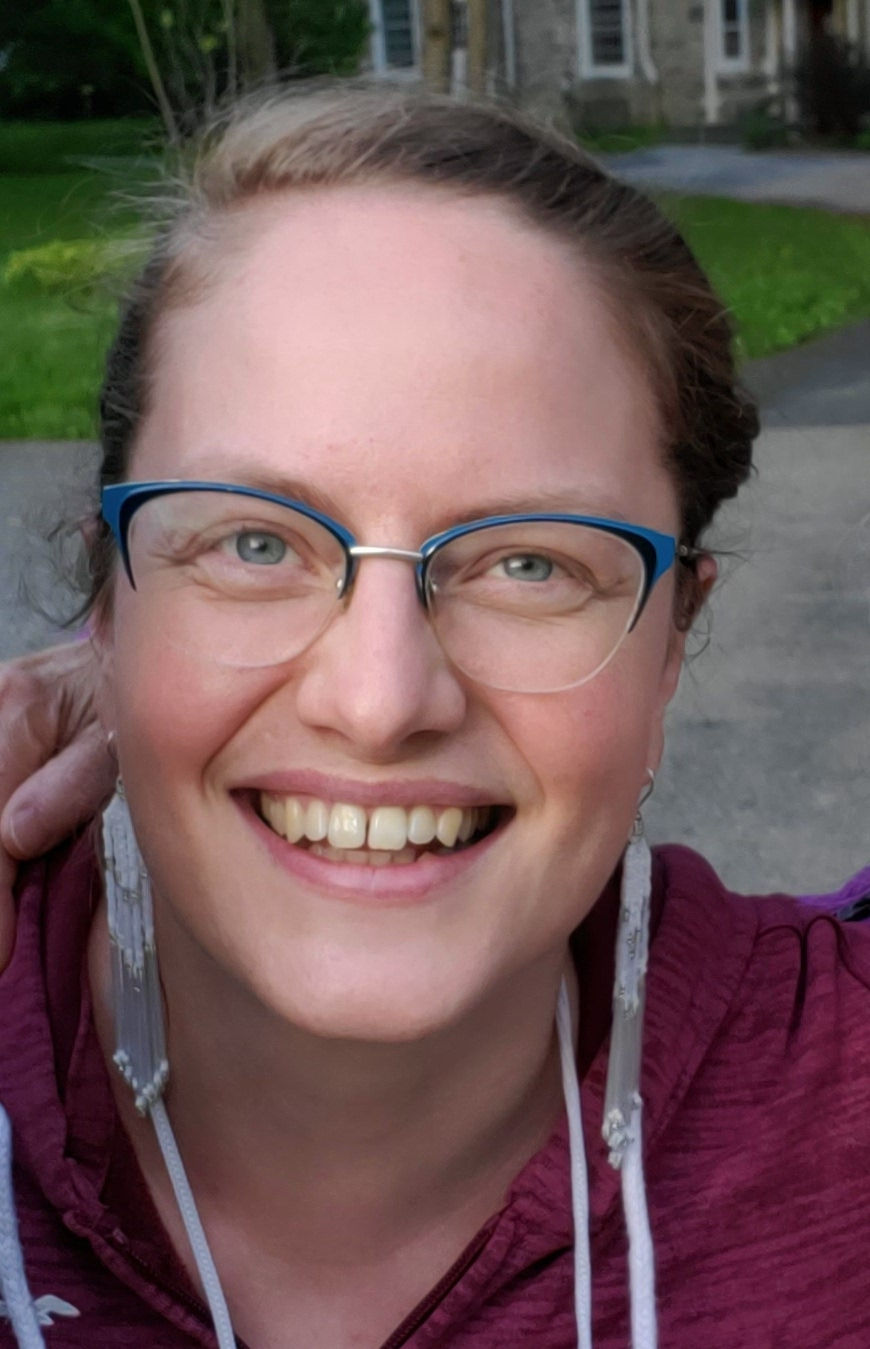
Lilia’s work is shaped by attentiveness to land, Indigenous wisdom, and the ongoing impacts of colonization. Photography functions as a form of witness, inviting attention to beauty and gratitude even amid despair. Awe, tenderness, and truth telling emerged as essential spiritual practices.
Luisa Giugliano and 15th Street Meeting
15th Street Monthly Meeting offers a spiritually grounded and relational context for this ministry. Located in the heart of New York City, the meeting carries a long tradition of engaged Quaker witness alongside a strong commitment to pastoral care and corporate discernment. As Luisa’s meeting, 15th Street provides accompaniment, accountability, and prayerful attention, walking with her as she listens for how her gifts are being called forth on behalf of the meeting and the wider world.
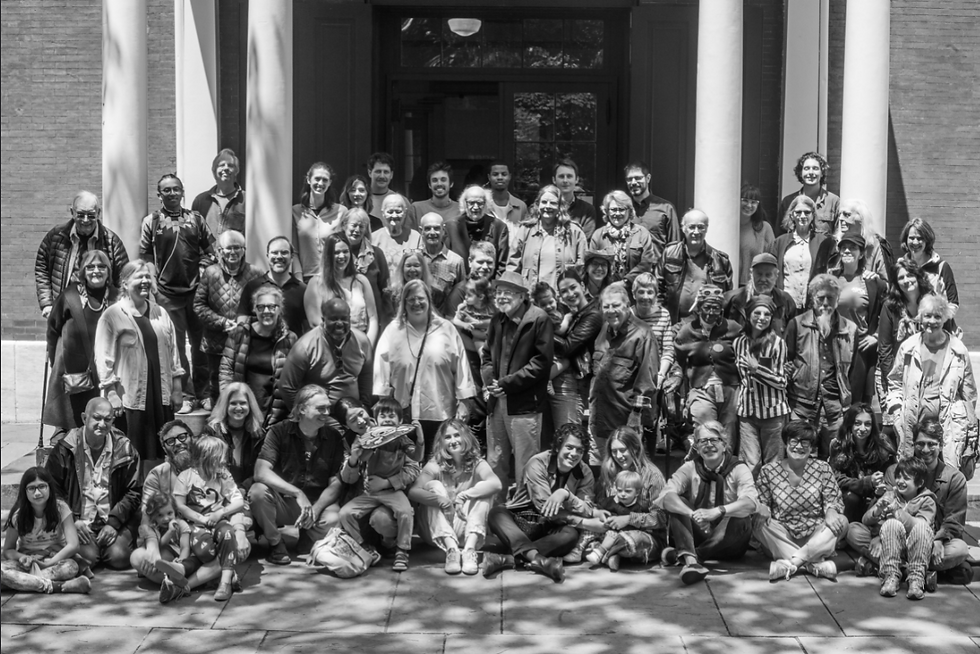
Luisa Giugliano and 15th Street Meeting are Fellows in the Incubator

Luisa Giugliano (she/her) is a member of 15th Street Monthly Meeting, where she currently serves as assistant clerk and as a member of the Pastoral Care Committee. Her public ministry is grounded in careful listening, spiritual accompaniment, and a deep attentiveness to how individuals and communities move through grief, disorientation, and change. An interdisciplinary scholar, poet, and chaplain, Luisa brings together theology, contemplative practice, and the arts in service of healing and faithful discernment.
Luisa holds an MDiv from Union Theological Seminary and an MFA in poetry, and she is a doctoral candidate in Consciousness and Transformative Studies. Through her work with groups and individuals, she creates spaces where difficult truths can be held with tenderness and where new meaning can emerge. She is the founder of Dreamhive, a center for circles, and lives with her family in downtown Manhattan.
How the Incubator Will Walk With the Fellows
Now that the Fellows have been named, the work shifts from discernment to formation and accompaniment.
Over the next two years, the Incubator will engage Fellows and their meetings through shared learning, peer reflection, theological grounding, and meeting based discernment. The focus will not be on productivity or outcomes, but on faithfulness, sustainability, and relationship.
Meetings will continue as active partners, practicing eldering and care in real time. The Incubator will offer structure and language, trusting that the deepest formation happens locally, in worship and relationship.
This is not a program designed to manufacture ministers. It is an invitation to remember how Friends have always done this work at their best slowly, prayerfully, and together, in the context of our worshipping communities. Are you as inspired as we are?

An Invitation to Resource What Is Emerging...
As Friends listened carefully through this season of interviews and discernment, one truth became clear. The need for careful accompaniment, practiced eldering, and meeting-based support for public ministry is far greater than the capacity currently available.
Friends spoke of carrying callings largely alone. Meetings expressed a desire to offer better care but named the limits of time, language, and shared structures. What was voiced most often was not a call for more programming, but for sustained relationship and spiritual companionship.
Expanding what the Friends Incubator for Public Ministry can offer will require additional resources. Greater support will allow accompaniment of more ministers and meetings, deeper formation for elders, and stronger theological grounding for this work. It will also allow the Incubator to move at the pace discernment requires rather than the pace scarcity imposes.
Friends are invited to support this work in several concrete ways.
Monthly gifts of five, ten, or twenty-five dollars provide steady support that allows for long-term planning and sustained accompaniment. We don't only provide fellowships, but workshops that have been attended by hundreds in the last seven months, at no cost to participants.
One-time gifts help underwrite specific needs: resources for elders and meetings and the expansion of shared learning gatherings.
Larger gifts or meeting-level contributions make it possible to expand future cohorts, develop regional networks of support, and offer formation to meetings not yet ready for full participation.
The Friends Incubator is a grassroots collaboration. This means your participation matters.
Friends who feel led may also encourage their meetings to include the Incubator in annual budgets or special collections, recognizing public ministry as a shared responsibility of the Religious Society of Friends.
Every gift, regardless of size, is a way of saying yes to ministry that is careful, communal, and grounded in worship.
Those who wish to support this work are invited to donate via PayPal or credit card through the Friends Incubator for Public Ministy or through check to our fiscal sponsor, Sandy Spring Friends Meeting. Checks should be made out to Sandy Spring Friends Meeting with "Friends Incubator" in the memo line. All donations are tax-deductible. Friends are also invited to hold this work in prayer, to speak about it in their meetings, and to imagine how their own communities might participate in the shared responsibility of accompaniment.
This is how Friends begin again together.
Welcome to a new year, Friends!


Comments